
A Conversation with Dr Swapan Dasgupta

Interviewed by Prem Ansh Sinha (Editor-in-Chief)
Edited by Alankrita Singh (Associate Editor) & Manjari Bhargava (Assistant Editor)
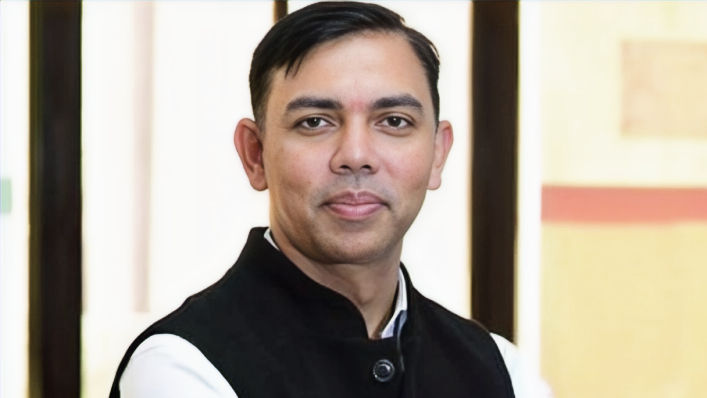
Dr Swapan Dasgupta is a Padma Bhushan and former Member of Parliament in the Rajya Sabha. He has served in editorial positions at several leading English newspapers, including The Statesman and The Times of India. He is one of India’s few contemporary thinkers on Hindutva and conservatism.
An edited transcript of the interview, as taken on 16 October 2024, is as follows.
Following the 2024 general elections, there has been a widespread circulation of an idea; the international media, as well as several Indian commentators, have also expressed it, stating that it was a ‘swan song’ of Hindutva. Do you think that this whole idea of consolidating votes on the basis of homogenising people on the grounds of culture, geography, and religion has failed, or do you have some other view on it?
One of the first lessons drawn from any political event is that there is very little something called a ‘swan song’; that obituaries are not necessarily written in the East. We in India tend to write obituaries after we know that the body has been cremated and the ashes have been truly dispersed; only then can we say that life has really been snuffed out.
There are two different aspects to the question you posed to me: the first was to deal with the general election of 2024, and the second with the idea, the perception, or the imagination which goes with the term ‘Hindutva’. Hindutva has some bearing on politics, but it is not exclusively a political mobilisation. To that extent, there will never be a time when in India you will get the entire community of people who see themselves as Hindus all voting in the same direction; it will never happen, and I hope it never happens, because it also assumes that everyone has jettisoned their individuality and mortgaged their political beliefs to one singular idea. I think one of the things which underpins your question is the fact that you think Hindutva is a singular composite idea. I would like to challenge that question. Why does this misconception arise? It arises because a lot of facile textbooks give the idea that Hindutva started because VD Savarkar wrote this book, and VD Savarkar said something, and he tried to codify it, et cetera.
Now, Savarkar is no doubt the person who popularised the term. I think, for that, Savarkar deserves the entire credit. But to say that Savarkar enjoys an intellectual copyright over what constitutes Hindutva is wrong. Savarkar believed that the people who considered the land which loosely began from Afghanistan and ended on the borders of Burma, and who considered that land to be their pitrabhumi and their matrubhumi, fatherland and motherland, ‘holy land’; that was his basic thing. He tried to distinguish it from other religious communities who had a different conception of what constituted their holy land, and the communities which did not have that notion at all. He tried to put that in, and to my mind, he tried to codify it, put it down, and popularise it in the 1940s, in particular the late 30s or early 40s, when he tried to use it as a polar opposite to the mobilising tool which was in opposition, to that of Jinnah’s Pakistan demand at one time. Hindutva, if you look at it and at the expression it means loosely, it does not mean Hinduism, and even Savarkar was very clear that it had nothing to do with your religious beliefs, that it encapsulated what he thought was the entire sentiment, the feeling, the history, the ethos of an entire people; but, in reality, he also tried to codify it, so there was a mismatch between what he tried to do at that point.
Hindutva, when you translate it back into English as a lot of people have done, is not Hinduism. What you get is the term ‘Hinduness’, which means that you are basically talking about certain impulses, certain sentiments, and ethos. With this, we get into the whole model about a lot of people saying that this is about a ‘Hindu rashtra’. This is an associated belief which comes along with them. Now, Hindu rashtra can mean something different. I personally believe that we are a secular state, but we are also in many ways a Hindu rashtra, because we are using the very old-fashioned standard political science distinction between a state and a nation. The nationhood of India is, to a very large extent, not essential, not totally, and not entirely defined by what can loosely be called Hindutva, and that is not Hindutva in terms of your religious faith, but in terms of customs, common beliefs, a certain shared sacred geography, and various things like that. Hindutva has some bearing on how you see the politics of the country, but it is not entirely dependent on that. I would not say that a person who votes for Congress is less of any other, the moment I start saying tha,t I am actually treading on very dangerous territory. It is understandable that the Bharatiya Janata Party (BJP) has tried to, at one time, it was because of certain circumstances that the term ‘Hindu’ came to be associated with the BJP, more than how much the BJP tried to, it was the others who made sure that the BJP actually got associated with the term. That way, the outcome of the 2024 election would lead you to believe that Assam is Hindutva, Uttarakhand is Hindutva, but Uttar Pradesh is not Hindutva, and parts of Ayodhya are half-Hindutva, which would be a slightly peculiar interpretation of what happened. While politicians have to think about what constitutes ‘Hinduness' and why India's nationhood and how people perceive India as a nation are important, I do not think they are so determinant of politics. Other issues, such as governance, how people posit themselves, all these things matter, and Hindutva comes in there somewhat, but it is not the sole determinant.
I have two questions coming from what you said. The very first thing that you said was that Hindutva cannot be homogenised, and you cannot expect votes from a single community, let us say the Hindus, and it is not something that is appropriate as well. So, how is Hindutva as a political ideology, if you see it as a political ideology, a stable ideology? The second question that I have is, from when you talked about the history of Hindutva, it was Chandranath Basu who coined it, so how was his interpretation of Hindutva different? If I am not wrong, it is in Bengali.
I do not think anybody has so far read Basu. It remains a very archaic text, scarcely available; it is also written in a very archaic form of Bengali. He wrote a certain history of India, and he used the term ‘Hindutva’ as part of it. But more than people using the term, there are other people who use the very essence of what constitutes Hindutva. It was very popularly used by Bankim Chandra Chatterjee, it was used in some ways by Swami Vivekananda, and it was used in some ways by a very interesting conservative thinker called Prem Mukherjee. In Bengal it was used quite a lot, and subsequently in Maharashtra it got used, people used it in their own little ways without necessarily using that expression. The ‘essence’ of what was there was used; it was Savarkar who popularised it, but it is a very old belief. Now, Vivekananda, for instance, believed that religion defines a nation and that the heartbeat of every Indian must beat to the same spiritual tune—I am paraphrasing his words.
Did it mean that he meant that every religious ceremony, belief structure, and everything should be homogenised? I do not think so. His beliefs and rituals were entirely non-vegetarian in character. In fact, he tried to use how he felt as a worshipper of Shakti with other traditions, even within Bengal, the Vaishnavite tradition and the Shakti tradition are completely different, but both of them have a certain commonality, the Sanātana Dharma, which is the term which was used and was more widespread before the term ‘Hinduism’ started being used by the British to have a convenient category of people they could put into a group. One thing is very clear, in Sanātana Dharma there is no such thing as a ‘uniform thought’. There are so many different schools of philosophy, and it is probably one of the very few religious traditions where even atheism is considered a part of it. To believe that you can homogenise the thing is a very facile one, it is also very convenient, it is something the opponents of Hinduism think and have said, that everyone wants you to have the same thing, the same structure, et cetera. That is a very silly way of thinking, a very facile way, of looking at the whole issue, and some of these sloganeering types have also helped contribute towards building up this thought. Now, is it a stable ideology? Who said it is a stable ideology? It is not; it is not an ideology, it is a sentiment.
Sir, I introduced you in the very beginning as one of the few contemporary thinkers of conservatism and Hindutva in India, especially in the English language. In media and writing, after the rise of the Prime Minister, we have come across people extending their support, but we have been unable to find any contemporary thinker who can drive beyond their subservience to the BJP and the Rashtriya Swayamsewak Sangh (RSS) or the Prime Minister, and they have been unable to read any contemporary literature on Hindutva. You have been in this industry, this thinking, for decades now. What do you think stops the English-speaking elites from supporting the ideology and writing on it? Why do you think it has been unable to reach the masses? People like Mr Arun Shourie tried, but I think they were later sidelined at a later part of their careers as well.
It is not about being politically sidelined. The point is very simply that Hindu nationalism, if I may use that term, was a stream of thought which was very prevalent in India till the 1940s and 1950s. It had its ancestry in a politically activist way, from people right from Aurobindo, Bipin Chandra Pal, and later Lokmanya Tilak; these people were very much the first followers. After the 1950s, there was an overwhelming dominance, if I may use such a word, of the ‘Nehruvian federation’, which, along with the left, highlighted first the enlightenment tradition in the west, and secondly the belief that everything must follow the path of rationalism. And post that the use of the term ‘scientific’—which was even incorporated into the Constitution for some obscure reason—these were the three predominant pillars of what were called the ‘worthwhile thought processes’ that were there. If you were a modern person, you must necessarily believe in all these things, that became a part of the new orthodoxy. As a result, it was thought that people who adhere to more traditional belief structures, who think that governance is different from culture, that India is held together by a certain loose adherence to a common culture, that India is not something which is held together by the Constitution alone—you have two different views. One is people who believe that India was created in 1947, or rather 1950, and there are others who say India is much more, India has a longer history. It is based on the fact that there are people who believe they are Indians, they believe they are Hindus, who believe that they have a certain commonality of culture which predates that of the Constitution. Your constitution gives you a certain set of rights, entitlements, and a sense of identity, so it is just two very different ways of looking at the world. Remember, this was also the time, the 50s, 60s, and even much after the 70s, which was a honeymoon period for what might be called the ‘socialist right’, and all of these ‘nationalisms’ were casualties of that. At that time, there were lots of people who wrote history; it was a big battlefield. You had entire schools of thought of what might be loosely called Hindutva, which highlighted a certain aspect of India’s heritage, which were overwhelmed by people who had the patronage of the government. It was the revival of Hindutva, which came about partly because of the Ayodhya controversy. The Ayodhya controversy was really the trigger which brought it back into the reckoning and intellectual space; there was a huge intellectual ferment. I have lived through that particular time when people started to question: what are we as a people, what is self-identity, where do we fit in, what is the meaning of secularism, does secularism mean that we abandon our culture, do we create an India which, in the guise of modernity, becomes indistinguishable and becomes globalist in nature? All these questions were actually raised at that particular point in time. Now, the BJP, being the party which actually championed it all, got lumped together, but I must say that the BJP never really promoted an intellectual ferment. The BJP may have been the beneficiary of it, but political parties do not promote intellectual traditions; they do not have the time for it, as that is not their priority. Frankly, intellectual people ask awkward questions all the time, and in politics, people do not like awkward questions.
So, how do you identify yourself: as an intellectual person or a person in politics?
My personal interest is more to do with ideas, it is principal, and the political aspect is secondary. I just got drafted into it because there are certain personal connections, but more than anything else, it is the idea. Five years ago, even ten years ago, if you said ‘conservatism’, it would not have had any resonance in India, but today we can actually talk about whether it is actually moving a little step further.
How do we take up the impulses which are being generated within India and link them to other broader currents in the world? A lot of people thought that we were freaks: these people wear saffron bandanas, they go around, and they do nothing. That was an accusation which I was confronted with, ‘what are people like you doing in that sort of thing?’ because what was not very clear to them was that there was a certain global train which was going on, a certain global channelling, it never manifested itself in a single sort. There was a big difference between Ronald Reagan and Margaret Thatcher. Today, for instance, do you know that one of the most exciting developments in European thought is coming from Hungary? There is an entirely different conservative tradition.
While you are at it, you recently attended the National Conservatism Conference in Washington, DC. There is one view that I hold, and I would like to know your arguments and your views on it. The conservatism of different countries cannot exist together; there is a common brotherhood for Islam, there is a common brotherhood for communism, there is a common brotherhood for liberalism, but conservatism as an ideology cannot exist together. So what is the whole purpose of this?
This is not something someone discovered yesterday; it is something which even Disraeli pointed out in the 19th century. Conservatism is national or nothing. It is always a national thing, but there are certain values. Why do you read other people? Why do I, for instance, find one of the most exciting writers, a person called Roger Scruton? He never wrote a word on India; he had very weird ideas sometimes, he was into very classical architecture, and he loved the old form of European culture, which is being sidelined today. But I like him because he epitomised certain values, a certain unchanging nature.
I think one of the things about conservatism is that we like to cling to our past; that might be a shortcoming or an advantage, it depends on how you want to see it, but our natural impulse is to actually be rooted in the past. I would love the Durga Puja to be like it was a hundred years ago. Of course, it has changed; there are a lot of good changes which have come about, but you like the idea that your great-great-grandfather or grandmother was celebrating it the same way as you are doing it, there is this idea of continuity and values. Hungary is very important today, because in Europe, they are trying to abolish the nation-state. The national identity is being sought to be abolished in favour of a contrived, manufactured European identity, and a European identity which is so open-ended to accommodate that even if your country is overwhelmed as Germany is, threatened to be by about two million people from North Africa, you feel that is all right because it is a constitutional definition, set by the rules. There are people who actually feel that an identity of, say, Germans or Hungarians or Austrians or Poles, is a definite, distinctive identity, just as we have one. You can be a globalist, and a lot of people are what people call ‘the Davos Man’, plant him or her anywhere in the world, and they will be fine, but I prefer to be somewhere, rooted in some particular thing. These are different approaches to life; it does not mean that all the conservative ideas are the same, they have to do with different national priorities, but there is a ground. Today, for instance, there is a growing tendency where ‘woke’ ideas have been promoted in a lot of ways, which has gone completely overboard. They are destroying the idea of parenthood by actually saying that a child at the age of ten can make up a decision about their own sexuality. Can they? It is just an absurd, ridiculous social engineering which is being attempted all over the world, and then naturally a lot of people all over the world have come together and said, ‘Look, we must put a stop to this’. You do not have to be a supporter of Donald Trump; a lot of them are, because they feel that to attack these, you need someone as blunt and as forthright as him.
Most of the literature published in academia on Hindutva, ironically, is written by people only on the left. What are your comments on it, despite being a part of the BJP for the last 10 years, where there is no such intellectual tradition?
The BJP, as I said, has not really nurtured a very strong intellectual tradition. Maybe it is not the task of a political party, but yes, the Marxists do have a complete strangling hold, and it is a self-perpetuating stranglehold over various departments, particularly in the social sciences. It is no longer a case of the Marxists themselves being a national phenomenon; it is also a global phenomenon. You go along with that thinking, and then you are assured of a certain cosy tenure in some American university, so it is a self-perpetuating thing which happens, and it does not do to be a supporter of the BJP. I have heard horror stories from poor guys in the West who have been supporters of the BJP and have made the mistake of telling people openly about it, and then the type of persecution that they land on, the subtle persecution, sometimes it is not so subtle. It is like being pro-Israel on some of the campuses of the United States today. I am irrationally pro-Israel; there is no ambiguity in my position on that.
Do you not agree with the Indian foreign policy stance on the two-state solution?
No, I do not believe in a two-state solution. I do not think it will ever happen. We create another terrorist state, we create half a terrorist state.
So, are you viewing it from the lens of realism?
I believe the development of Israel in West Asia along with the changes which are taking place in Saudi Arabia, the United Arab Emirates, Egypt, et cetera, are going to be completely beneficial for a country like India, and Israel may be the only democracy, but it is not our job to tell Egyptians how to run their country or even the Saudis. As we saw in Bangladesh, democracy is a very good thing, but sometimes it is not good for our neighbours.
If caste could actually be used to consolidate votes, it has been done for a long time in religion. Realistically speaking, a country like India can't move beyond the binaries of caste and religion, but what exactly is your idea on using communalism as a way of getting votes?
Well, when you inject polarisation based on either faith, language, or the differences of people, in any constituency, you will find that invariably the approach is never made to people as individuals—in a very small constituency perhaps—but by and large, they are made on the strength of a community and that community might be based on their lived experience in a particular residential cluster, caste, religion, or various other things. Now that is something which in India is inescapable, and the question arises about the more crude manifestations of this, for instance, take the very touchy question of beef.
Most people like to shy away from this question; I like to answer it. At one level, I believe people should be completely free to eat whatever they feel like, that is, up to a matter of personal taste, sometimes a matter of family traditions. People are vegetarians because they have always been vegetarians from day one of their lives, and they cannot countenance the idea of any smell of meat. Just put some utensil which has it, they can find it, there is a sense of smell and repulsion. Do we treat them as some sort of second-class citizens? No. The point about beef is that for a large percentage of Indians, there is a Great Wall of China, which is created, and that is beef; everything else is allowed, not beef. It is not a question of rationalism; it is a question of what you believe in and what your sense of aesthetics is; you must respect it. When I go to a Chinese restaurant in Europe with a Muslim person, I take care not to order pork, because why wilfully offend somebody's sensibilities? It is a bit of an adjustment, which comes.
Now in India, beef happens to be one of those very touchy areas which offends a great majority of people and I do not think anyone becomes less Muslim by not having beef, in fact, the idea of beef and Muslim identity becoming coterminous was something which was very specifically an Indian experience and it was born out of sectarian tension, it was the British who actually got it done because they are the ones who made beef eating popular in this country, it is historically demonstrable. So while I have grave reservations about some of these Muslim elements who go around with vigilante squads, I do recognise that beef is something on which we must take a view which is different from that of the European or the American experience, but which is an Indian experience.
You mentioned at the very beginning that there is a wide difference and distinction between Hindutva and conservatism. Could you please address that in the Indian context?
In very simple terms, conservatism is not only cultural but also political, whereas Hindutva is exclusively a culture. The scope of each of these categories is very different; you can be a conservative and, for instance, believe in presidential elections or parliamentary democracy. You can have people who can have different views on the question of democracy itself; you can have different perceptions of that, but they can be conservative. Hindutva means you must agree with certain ideas.
As you said earlier, it is a sentiment. It is wrong to call it a political ideology.
Of course, it is wrong to call it a political ideology, because it is not a political ideology; it is a sentiment.
Article 370 has been amended; what do you think will the future of Hindutva politics be?
The BJP’s. These are not Hindutva politics. Right from the 1950s, there was a certain belief in India that Article 370, which prevented the full integration of Jammu and Kashmir into the Indian Union, must go, and it took a very long time, about seven decades of incessant political agitation. There is another belief which says that all Indians must have the same personal laws, regardless of whether they are Christian, Muslim, Hindu, or Sikh. It is something which is still on the anvil, that will take time; we have taken the first baby steps in the direction of achieving it, but I think it will require far more deliberation. You are not creating a personal law based on religion; you cannot say that Manusmriti must be the thing, or that Sharia must be the thing. You are creating it out of what are called certain ‘modern sensibilities’, which are also based on Indian realities, and trying to get that is a difficult process. It involves a long series of consultations and requires debates every time, so the process has just begun. Just because someone in Uttarakhand has given some silly thing, some ridiculous approach has been put in, that is not serious stuff, sloganeering politics. I think we have to go beyond sloganeering politics.
I would like to rephrase and ask again. You say that Hindutva is a sentiment, but there is a certain section of people, and even the BJP, who say that Hindutva is political. What is its future?
Of course, there are such people, you are absolutely right. My perception of Hindutva is my perception of Hindutva, and tomorrow you get someone else, he will be different. Yogi’s perception is completely different, if I have a dialogue with him, we will find that there are more differences than similarities on what he sees as Hindutva, though unlikely, because I have spoken to his guru, Mahant Avaidyanath, who had very interesting views on Indian history and Hindutva. But that is another thing.
There are people whose Hindutva stems from their reading of history. Amit Shah’s Hindutva belief is completely based on his reading of history, and he is a very erudite man. If you ever get a chance to actually quiz him, grill him, it should be worth it because it is something he has thought about. Others have differences; some people see Hindutva as something in opposition to Muslims. I do not have much time for them, just like there are those Muslims in Bangladesh who feel that all Hindus must be driven out, you have similar versions.
So, what is the right way of going about it?
There is no right way. Why should you think that? The communists might believe that there is something called right and wrong, but here, we do not necessarily have to believe that I have a certain infallibility, that I have a monopoly on truth and wisdom. That is one of the things which we learn in both the conservative tradition as well as the Hindu tradition: that there is no such thing as absolute certainties. Some people have experimented with various forms of philosophy, et cetera, and they have debated and contested it. Just because you are a Shaivite and I am a Vaishnavite does not necessarily make us enemies, nor does it mean that we are the same; we are different, yet we are similar, and what that similarity is, really, the stuff of intelligent politics.
Ends.


Comments